
Tile
Bathroom tile installation, from the membrane out
Shower surrounds, feature walls, niches and floors, laid out so the cuts look intentional and set over waterproofing that's built for a wet room in a humid climate.
Open daily, 7:00 AM to 10:30 PM · Consultations across Tampa Bay
Good tile work starts before the first tile
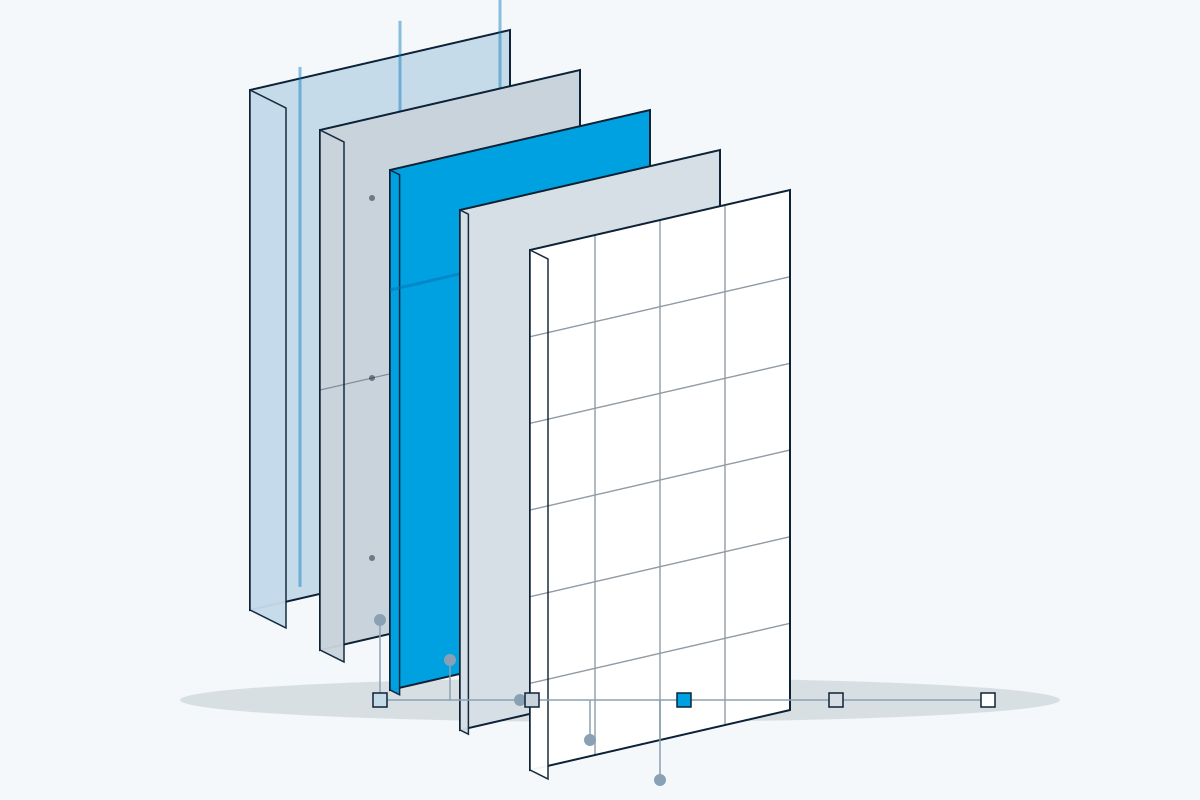
Tile itself doesn't keep water out. Grout is porous, and most tile absorbs at least a little moisture. What protects the wall behind a shower is the waterproofing layer under the tile, and the care taken at corners, niches, valves and the joint where the wall meets the pan.
So when we quote a tiled shower or surround, the price includes the parts nobody photographs: backer board or foam board, a continuous membrane, sealed seams and penetrations, and a planned slope to the drain. Then comes the part everyone notices, which is the layout.
We plan where full tiles fall, where cuts go, and how lines carry from the floor to the wall and around the niche. A centred niche with slivers on both sides is a layout failure, even if every tile is perfectly set.
What we tile
Where tile goes in a bathroom remodel
Shower walls and surrounds
Floor-to-ceiling or to a set height, with niches, benches and trim details. The most demanding tile job in the house.
Shower floors
Small-format mosaics or linear-drain layouts that let larger tiles slope in one direction.
Tub surrounds
A tiled surround above an alcove or drop-in tub, waterproofed the same way as a shower.
Feature walls
Behind the vanity or bath, where a pattern or handmade tile carries the room's personality.
Wainscot
Tile to chair-rail height in powder rooms and kids' baths. Practical and a little old-fashioned in a good way.
Bathroom floors
Covered in detail on our bathroom flooring page.
Tile types and what they're good for
- Porcelain
- Low absorption and very hard wearing. Suited to showers, floors and large-format wall panels.
- Glazed ceramic
- Easy to cut and shape, huge colour range. Excellent on shower walls; less ideal on heavy-traffic floors.
- Zellige and handmade
- Irregular edges and glaze variation. Beautiful on feature walls, slower to install and meant to look imperfect.
- Natural stone
- Marble, travertine, slate. Needs sealing and gentle cleaners, and a little more patience with our region's hard water spotting.
- Glass mosaic
- Reflective accent bands and niche backs. Needs a white setting material so the colour reads true.
If you're choosing between the two most common options, read our porcelain vs ceramic comparison. For showers specifically, this guide to shower wall materials puts tile beside solid-surface and panel options.
Patterns, grout and trim
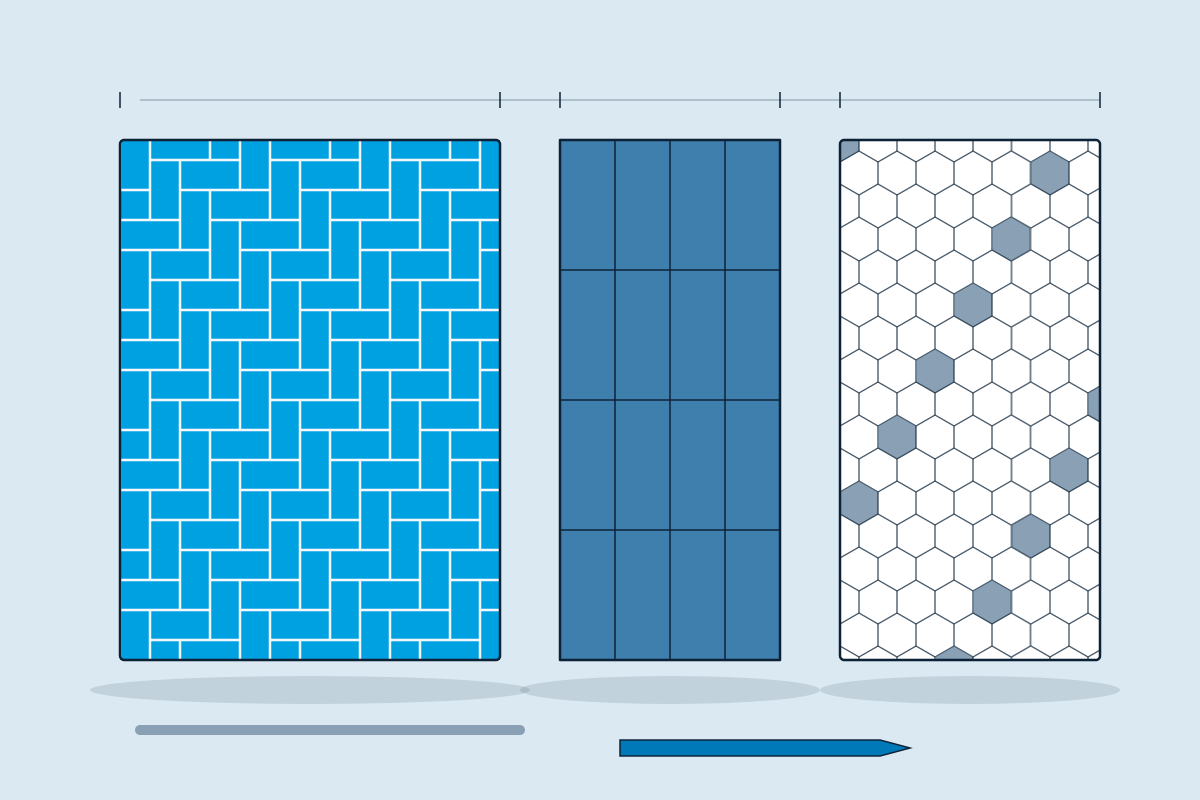
A straight stack looks calm and modern. A running bond is forgiving of slight size variation. Herringbone and chevron are lively but produce more cuts and waste. Vertical stacks make a low Florida ceiling feel taller; horizontal runs make a narrow bathroom feel wider.
Grout colour matters more than people expect. A matching grout lets the tile read as a single surface; a contrasting grout draws the pattern. In a humid bathroom, a mid-tone grout forgives everyday discolouration better than bright white. We'll talk through cementitious, high-performance and epoxy grouts depending on where it's going.
Edges finish the job. Metal profiles, bullnose pieces, mitred corners and stone sills each give a different look at the outside edge of a surround or niche. It's a small line item that decides whether a wall looks built or merely covered.
Our tile installation process
Layout planning
We measure every wall, mark fixture and niche positions and decide where the pattern starts. You see the plan before tile is cut.
Demolition to the studs
In wet areas we remove the old surround and backer so we can check framing and plumbing and see any past water damage.
Board and waterproofing
Cement board or foam board, taped seams, then a continuous sheet or liquid membrane, including around valves and inside niches.
Setting
Tile set with the right thinset for its size and type, back-buttered where the format calls for it, with spacing and lippage controlled.
Grout, sealant and trim
Grout, flexible sealant at changes of plane, trim pieces and a final clean. Sealer on stone and where the grout type needs it.
What drives the cost of bathroom tile work
Tile budgets are rarely about square footage alone. Labour usually outweighs material, and the details add labour quickly. The main factors are:
- The tile itself: handmade, stone and large format cost more to buy and to set
- Pattern complexity and the number of cuts
- Wall condition and how much needs rebuilding behind the tile
- Niches, benches, curbs and window returns in the shower
- Trim and edge finishes
- Grout type
Common tile problems we're called about
Loose or hollow-sounding tiles usually mean poor coverage when they were set, or a substrate that got wet.
Cracked grout at corners happens where grout was used instead of a flexible sealant at a change of plane.
Mould that keeps coming back in the same spots points to trapped moisture behind or under the tile, not just surface cleaning.
Stained or etched stone is often from acidic cleaners or unsealed surfaces.
If it's a shower, look at our shower remodeling page too. A failing surround is often best solved by rebuilding the whole shower.
Tile questions
Can new tile go over the old shower tile?
We don't do it in showers. You can't inspect or rebuild the waterproofing behind old tile, and the added thickness causes problems at the valve, niche and glass. Removing to the studs is the reliable approach.
Do I need to seal porcelain tile?
Porcelain generally doesn't need sealing. Some grout types benefit from sealer, and natural stone definitely does. We'll tell you which products apply to what's installed.
Should shower tile go all the way to the ceiling?
It isn't required, but floor-to-ceiling tile looks finished, is easier to clean and helps with steam in a humid bathroom. With a steam shower or a very tall enclosure it's the sensible option.
Can I supply my own tile?
Often, yes. We'll confirm quantities, check it's suitable for where you want it, and discuss how owner-supplied material is handled in the proposal.
Pairs well with
Tile installation areas
We work throughout Tampa and in these surrounding communities:
Book a consultation
Planning a tiled shower or feature wall?
Tell us about the room and the look you're after, and we'll arrange a consultation.
- Which bathroom, and roughly how old it is
- What bothers you now: leaks, dated tile, a tub you don’t use
- Any photos or ideas you’ve saved
Call us
(813) 535-5487 Tap to call nowOpen daily, 7:00 AM to 10:30 PM
501 E Kennedy Blvd, Tampa, FL 33602